
On this page
- A Chesapeake gutter calendar
- Why timing matters here
- How many times for your house?
- Signs your gutters are overdue
- After a storm
- Terms you will hear
- Gutter cleaning at a glance
- Where gutter cleaning matters around Chesapeake
- A first step worth taking
- What a cleaning visit should cover
- Cleaning safely yourself
- Why debris builds faster here
- Cleaning and gutter life
- Cleaning plans and reminders
- Signs cleaning has been missed
- Cleaning two-story gutters
A Chesapeake gutter calendar
| Time of year | What falls | What to do |
|---|---|---|
| March to May | Pollen, oak catkins, maple seeds | Clean in late spring |
| June to August | Wettest months; storms | Check before tropical storms |
| September to November | Peak hurricane season, then leaf drop | Check after storms; clean after the leaves are down |
| December to February | Late leaves, winter storms | Clear any late leaf fall |
Why timing matters here
Rain is spread through the year but heaviest in summer. July and August are the wettest months, at about 5.3 inches each, and November is the driest, at about 3.3 inches, in the Wikipedia climate table. That makes a late-spring clean the most important: it clears pollen and catkins before the heavy months. The fall clean deals with the leaf drop before winter storms.
How many times for your house?
| Trees over the roof | Cleanings a year |
|---|---|
| None nearby | Once or twice |
| A few broadleaf trees | Twice |
| Large oaks or sweetgums | Two to three |
| Pines | Three or more, or guards |
Signs your gutters are overdue
- Water spills over the front in moderate rain.
- Plants or seedlings growing in the gutter.
- Water standing in the trough a day after rain.
- Sagging between hangers.
- Streaks or stains on the siding below.
- Mosquitoes around the eaves.
After a storm
Wind strips leaves and twigs into gutters. After any big storm, look from the ground for debris, sagging and bent sections, and have them cleared before the next rain.
Terms you will hear
| Term | What it means on a Chesapeake house |
|---|---|
| Outlet | The opening in the gutter bottom where the downspout joins, usually with a riveted drop sleeve. |
| Downspout | The vertical pipe, also called a leader, carrying water to the ground. Common sizes are 2x3 and 3x4 inches. |
| Micro-mesh guard | A fine stainless mesh on a frame over the gutter that stops pine needles, oak catkins and grit while letting rain through. |
| Slope | The fall of a gutter toward its outlet, often about a quarter inch per 10 feet. Too flat and water stands, breeding mosquitoes. |
See gutter cleaning and are gutter guards worth it.
Gutter cleaning at a glance
| What people ask | Short answer |
|---|---|
| Minimum? | Twice a year with trees nearby |
| Most important? | Late spring and after leaf drop |
| Under pines? | Three or more, or guards |
| After storms? | Check for debris |
Where gutter cleaning matters around Chesapeake
| Neighborhood or town | Why it comes up there |
|---|---|
| Deep Creek | Heavy debris near the swamp |
| Western Branch | Wooded lots along the river |
| Moyock | Open lots with lighter loads |
A first step worth taking
Put two reminders in your calendar: one in late May and one after the leaves are down. Add a third if pines overhang the roof.
What a cleaning visit should cover
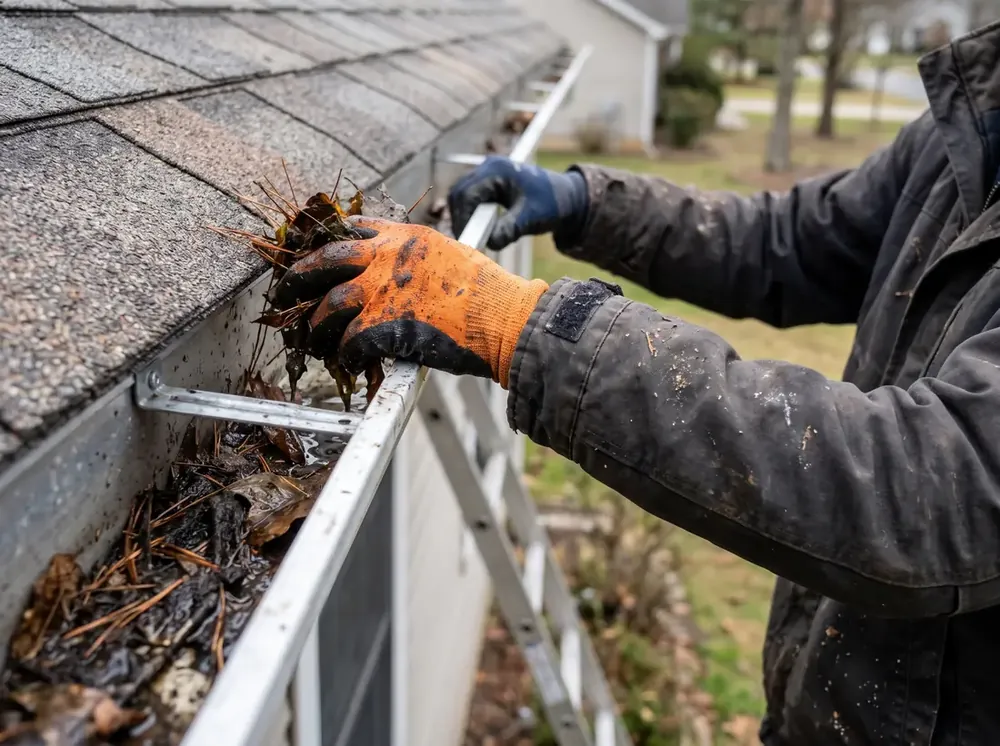
- Debris removed by hand from every run and corner.
- Debris bagged and taken away.
- Outlets cleared and downspouts flushed.
- Roof valleys and edges checked.
- A water test to confirm the gutters drain.
- A note of any loose hangers, leaks or damage.
Cleaning safely yourself
- Only on single-story houses with level, firm ground.
- Use a sturdy ladder with a stabilizer that rests on the roof, not the gutter.
- Do not lean out; move the ladder.
- Work in dry, calm weather.
- Wear gloves; debris can hide sharp metal and screws.
- Never clean gutters with a storm approaching.
Why debris builds faster here
Chesapeake's trees drop something in almost every season. Spring brings pollen, oak catkins and maple seeds. Summer storms strip green leaves and twigs. Fall brings the main leaf drop and sweetgum seed balls, and pines shed needles all year. In a warm, wet climate, that debris breaks down into a dense sludge in the trough, which holds water and grows seedlings.
Cleaning and gutter life
Clean gutters last longer. Wet debris adds weight that pulls hangers loose, holds water against the metal and the joints, and keeps the fascia damp. Regular cleaning is the cheapest way to protect the whole system.
Cleaning plans and reminders
Many homeowners book cleanings at the same two points each year, late spring and after the leaf drop, and add a check before hurricane season when storms are forecast. Some contractors offer a standing plan that does this automatically. If you clean yourself, set reminders for the same dates and keep a note of how full the gutters were each time. After a year or two, the notes show whether two cleanings are enough or whether guards would save effort.
Houses under pines are the exception. Needles fall all year and mat densely, so three or four cleanings, or micro-mesh guards, are usually needed to keep the trough clear.
Signs cleaning has been missed
Overflow in an ordinary shower, seedlings in the trough and a downspout that barely runs are all signs a cleaning is overdue.
Cleaning two-story gutters
Two-story gutters are best left to a contractor with the right ladders and safety gear. Ask whether they clean from the roof or a ladder, and how they protect the shingles.